
Health & Wellness
Self-Improvement
Reference
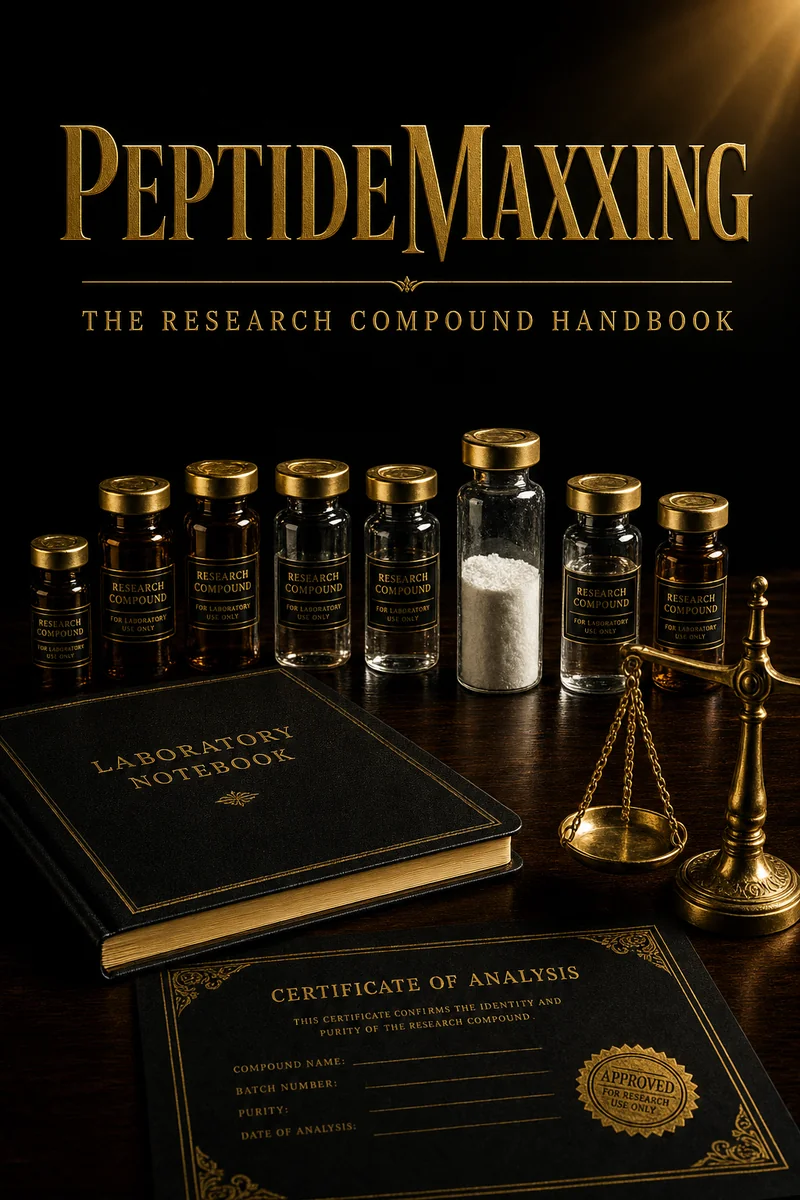
Peptidemaxxing
by Musa Editorial
(0 reviews)
$26.99
Published: August 13, 2026
ISBN: 978-1-234568-03-0
328 pages
Description
Peptidemaxxing is the disciplined end of the peptide conversation: choosing compounds by mechanism rather than by forum reputation, verifying what is in the vial before it is opened, and running protocols with the same record-keeping a lab would use. This handbook covers the five compound families that make up almost every real protocol — metabolic, growth-axis, repair, longevity, and cognitive — and then spends equal time on the unglamorous half nobody writes about: certificates of analysis, reconstitution maths, cold-chain storage, and the sourcing questions that separate a verified vial from an expensive unknown. 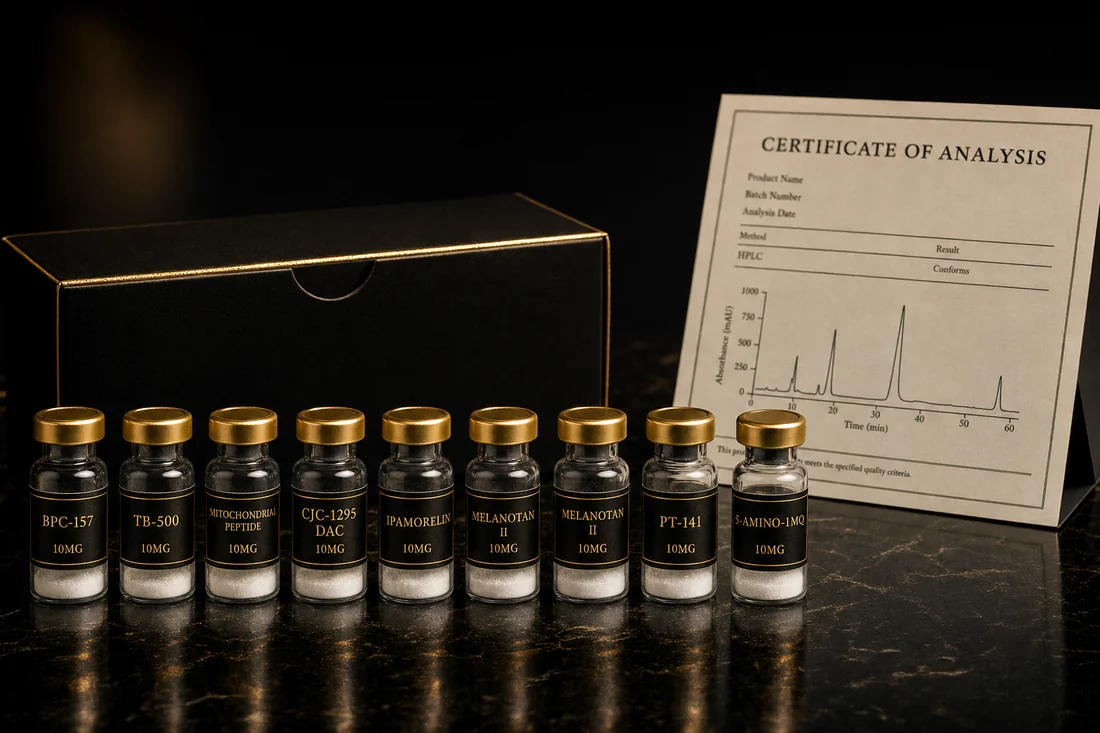
What Peptidemaxxing Actually Means
A peptide is a short chain of amino acids that signals rather than supplies — it tells the body to do something it can already do, instead of substituting for a hormone outright. That single property is why the category behaves differently from anything else in the optimization world, and why dose, timing, and pulse pattern matter more than raw milligrams. The book opens by separating the three tiers readers conflate constantly: approved drugs with Phase 3 human data, compounds with credible early human trials, and compounds whose entire evidence base is preclinical. Every later chapter is graded against that scale, so a reader can see at a glance whether they are working with medicine, with early science, or with a hypothesis.The Five Compound Families, Sorted by Mechanism
The metabolic family covers the incretin receptor agonists — semaglutide, tirzepatide, retatrutide, and the amylin analogue cagrilintide — organised by how many receptors each one engages and what the published trials produced. The growth-axis family splits into GHRH analogues such as sermorelin, CJC-1295, and tesamorelin, and ghrelin-receptor agonists led by ipamorelin, with a chapter on why the two are dosed together and what carbohydrate timing does to a pulse. The repair family centres on BPC-157 and TB-500 and their non-overlapping local and systemic mechanisms. The longevity family covers GHK-Cu, epitalon, NAD+, and the senolytic work. The cognitive family collects selank, semax, DSIP, and the Khavinson bioregulators, most of which come out of Soviet and Russian programmes with published trial data that Western reviews rarely index.Reading a Certificate of Analysis Properly
A COA is the only document standing between a buyer and a mystery vial, and most people read it wrong. This chapter walks through an actual HPLC chromatogram line by line — retention time, peak area, what a shoulder on the main peak indicates, and why a purity figure means nothing without the mass spectrometry identity confirmation beside it. It covers the difference between a batch-specific certificate and a generic one reused across every lot, what an endotoxin figure is for, and the specific red flags: no batch number, no analysis date, no analyst signature, or a certificate that cannot be matched to the lot printed on the vial in hand.Reconstitution, Storage, and the Dose Maths
More protocols fail on arithmetic than on pharmacology. The book gives the full working: how bacteriostatic water volume sets concentration, how to convert a target microgram dose into units on an insulin syringe, and why the same 10 mg vial yields completely different unit counts depending on how much solvent went in. Storage gets its own chapter — lyophilized powder at minus twenty, reconstituted vials at two to eight degrees with a realistic stability window, light-sensitive compounds that need protecting, and what actually happens to a peptide that has been left at room temperature over a weekend.Sourcing Without Getting Burned
Sourcing is where most of the money is lost. The chapter sets out what a serious vendor publishes without being asked — per-batch third-party certificates tied to lot numbers, honest stock status, clear vial sizes, and a real return path — and what the absence of each of those tells you. It covers price-per-milligram as the only fair comparison across vial sizes, why the cheapest listing is frequently the most expensive compound once mass is accounted for, and why a compound carried by a single vendor leaves a buyer with no way to sanity-check a price. For readers who want a working example of a catalogue that publishes this information, the book points to maxxingpeptides.com, which lists compounds with documented purity, stated vial sizes, and published certificates of analysis.Stacks With an Actual Mechanistic Basis
Most published stacks are two compounds that happen to be popular in the same month. This chapter keeps only the pairings with a real rationale: GHRH analogue with ghrelin agonist, because the receptors are independent and the pulse compounds; BPC-157 with TB-500, because one is local and short-lived while the other is systemic and long-lived; amylin with GLP-1, because the satiety pathways are separate. Each pairing gets its mechanism, its evidence grade, its timing requirements, and an honest note on where the combination has no trial data at all.Who This Book Is For
Peptidemaxxing is written for the reader who has moved past the question of whether any of this works and now needs the operational detail: what to buy, how to verify it, how to store it, how to calculate a dose, and how to tell a credible source from a confident one. It assumes no chemistry background, defines every term at first use, and ends each chapter with a one-page checklist — the version to follow tonight, and the deeper protocol for readers ready to run it properly.Reviews
No reviews yet. Be the first to review this book!